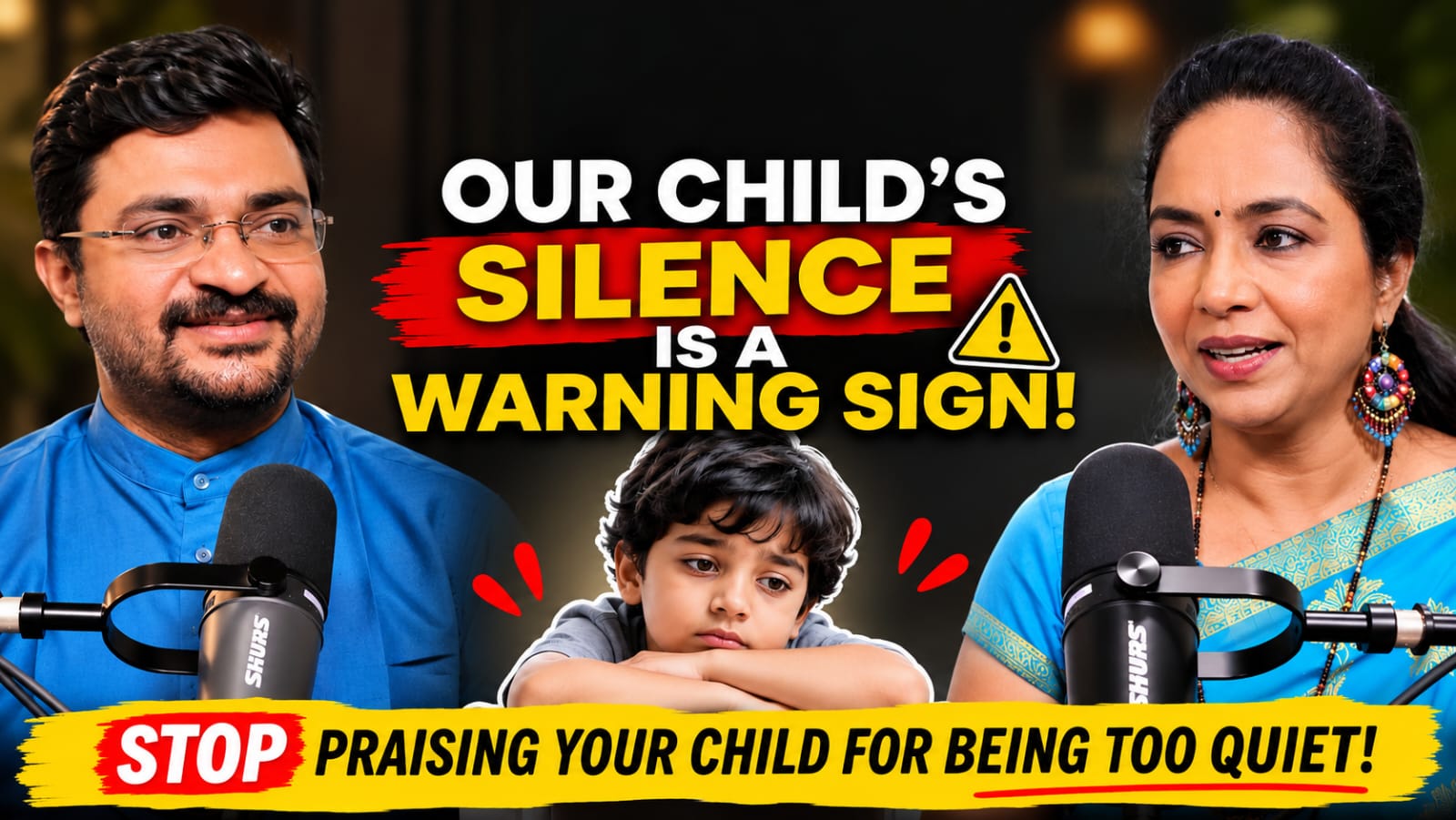
Mumbai, 18 November 2026: On Children's Day, FitNest Podcast host Vidya Raj Sharma sat down with trauma-informed psychotherapist and psychologist Ajay D'Almeida for a 49-minute conversation on a subject most families rarely talk about: how experiences in the earliest years of life can quietly shape adult relationships, emotional reactions and even physical health.
The episode is the fifth in Season 1 of FitNest Podcast, the Hinglish health and wellness video podcast produced by Mumbai-based Vigyapan Waale.
Episode details
- Show: FitNest Podcast, Season 1
- Host: Vidya Raj Sharma
- Podcast Director: Raj Sharma
- Produced by: Vigyapan Waale
- Guest: Ajay D'Almeida, Trauma-Informed Psychotherapist & Psychologist
A parent's questions, an expert's answers
Vidya approached the conversation the way many viewers would: as a mother of a nine-year-old. She asked what happens when a parent loses their temper, how to tell whether a child is struggling, and why so many adults keep repeating the same painful patterns.
Ajay D'Almeida works with high-functioning adults, including doctors, officers, business owners and corporate professionals. He answered with an approach grounded in evidence rather than slogans.
What childhood trauma really means
The episode begins with a definition. Trauma comes from the Greek word for "wound". It is not only about major events: it is anything that overwhelms a child's still-developing nervous system. Loud arguments at home, constant tension or neglect can all leave a lasting mark.
The conversation also introduces the Adverse Childhood Experiences (ACE) study, a large study of about 17,000 people conducted in the 1990s. It linked difficult childhood experiences with health and life problems in adulthood, and showed that the effects of early adversity reach beyond the mind.
Why adults repeat the same patterns
Vidya asked why people often end up in similar relationships again and again. Ajay explained that the nervous system tends to work from familiarity rather than choice, so people can recreate what they grew up with even when they try hard not to. When someone keeps reaching the same point in relationships, work and parenting despite real effort, the episode suggests it may be time to seek professional help rather than self-diagnose.
Three steps to trauma-proof children
For parents, the episode offers simple, practical guidance:
- Lower your tone. Calm yourself first, then speak gently. Children respond to how something is said more than what is said.
- Give full attention. Put the phone away, make eye contact, and come down to the child's level instead of talking from above.
- Listen and don't dismiss. Children who feel safe telling the truth are more likely to come to their parents first when something goes wrong.
Vidya highlighted the idea of "repair after rupture": when a parent loses their temper, returning quickly with reassurance and a warm hug helps the child recover. The one sentence the episode recommends every parent say more often is: "I am with you."
Myth or fact
In the myth-or-fact round, Vidya put common beliefs to the expert:
- "I don't need anyone" is always a sign of strength. Myth. It can be hyper-independence, a response learned when the people around a child were unreliable.
- Quiet, obedient children are always emotionally healthy. Myth. Very quiet children may have learned that silence keeps them safe, and should be gently encouraged to express themselves.
- Boys told not to cry often grow into men who show sadness as anger. Very often true. Suppressed emotions can surface later as explosive anger.
- To heal, you must cut off your parents. Not as a blanket rule. Limiting contact may be needed only in cases of abuse, and only after professional assessment.
- Venting to friends is therapy. No. It can bring relief, but relief is not healing.
- Overthinking is just a habit. No. It is often a symptom rooted in a lack of safety in early life.
Social media is not therapy
The episode closes with a caution about the "pop psychology" common on Instagram, where words like "narcissist", "gaslighting" and "trauma" are used loosely. Viewers are encouraged to check credentials and cited studies, and to remember that one video can make someone aware of a problem but cannot heal it.
About FitNest Podcast
FitNest Podcast is a Hinglish (Hindi + English) health and wellness video podcast produced by Vigyapan Waale in Malad West, Mumbai, and hosted by Vidya Raj Sharma. Each episode features one qualified expert who answers the health questions people actually search for and separates facts from myths. New episodes release every Saturday at 5 pm IST on YouTube, Spotify, Apple Podcasts and Amazon Music.
This episode is for general education and awareness only and is not a substitute for professional mental health or medical advice. If you are struggling, please reach out to a registered mental health professional.